Quiet Sensory Tools for Teens at School: Effective Strategies to Manage Sensory Overload
Sensory overload in teens occurs when incoming sights, sounds, textures, and movement exceed a young person’s ability to process them, producing anxiety, distraction, or shutdown in the classroom. This article explains why quiet sensory tools matter for adolescents, how discrete supports reduce overload in high-school settings, and when to seek coordinated clinical help. You will learn specific, school-friendly tools, clear mechanisms for why they work, self-regulation techniques teens can use without drawing attention, and how schools can implement accommodations.
Practical checklists and comparison tables help teachers, parents, and students choose options that target tactile, proprioceptive, and auditory systems. Throughout, I reference related conditions such as Sensory Processing Disorder, ADHD, and Autism Spectrum Disorder, and outline how virtual therapy can complement in-school strategies for assessment and planning. Read on for tool recommendations, classroom tactics, and concrete next steps for families balancing independence and academic expectations.
What Are the Best Quiet Sensory Tools for Teens Experiencing Overload at School?
This section lists discreet, classroom-appropriate sensory supports and explains their primary benefit and typical use-case. Quiet tools supply targeted input to a sensory system—tactile items redirect touch-seeking, proprioceptive pads deliver calming deep pressure, and non-electronic auditory options reduce competing noise without signaling distraction. Below are five top quiet tools ideal for teens who must remain engaged yet regulated.
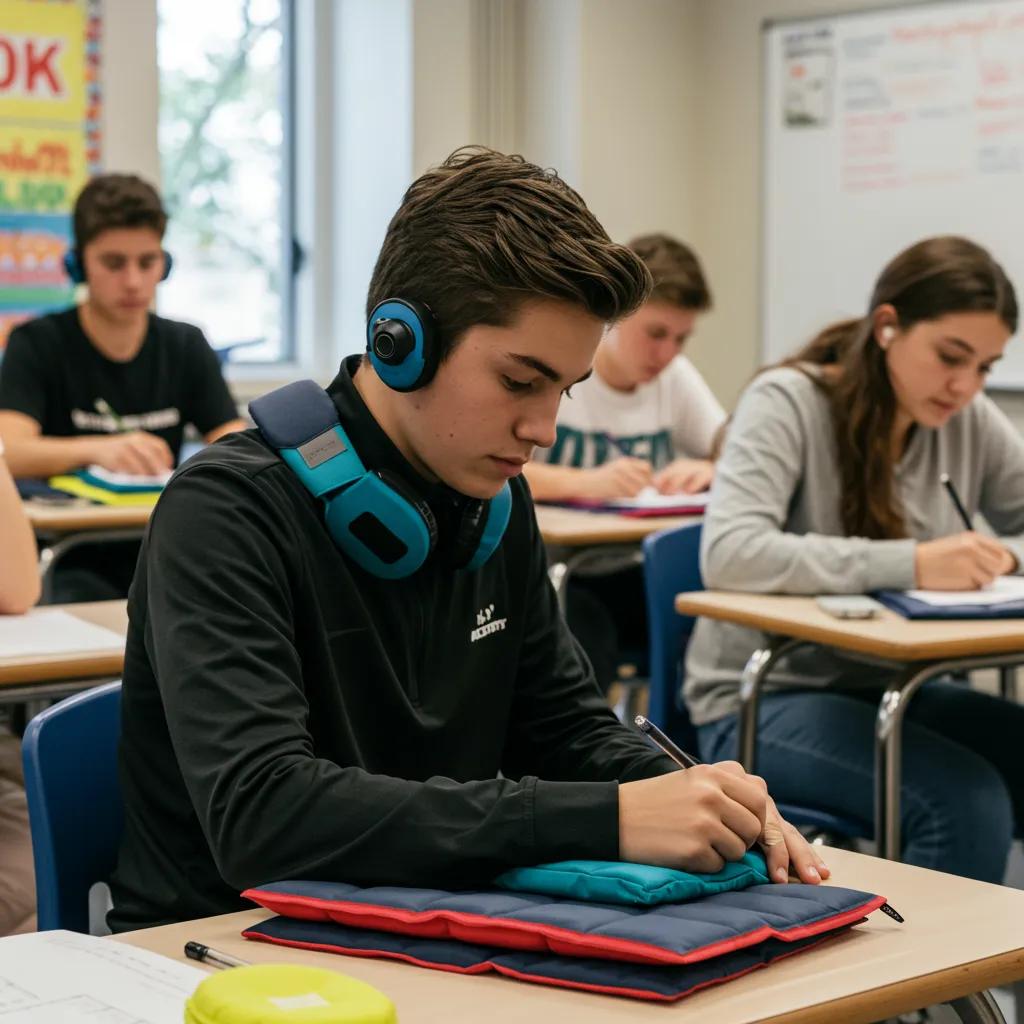
- Weighted lap pad: Provides calming proprioceptive input to reduce restlessness during seated work.
- Noise-masking earbuds (non-electronic or soft foam): Low-profile sound control that limits ambient distraction.
- Textured pencil grip: Tactile feedback that supports fine motor control and focus without drawing attention.
- Silent fidget (squishy or fabric-based): Quiet tactile engagement for redirecting excess sensory drive.
- Chewelry for teens: Discreet oral input option for teens with oral sensory needs that avoids classroom disruption.
These discreet choices emphasize teacher- and peer-friendly use while targeting common triggers. Each tool minimizes visible distraction, supports self-regulation, and can be trialed privately to respect teen autonomy and classroom norms.
Understanding Sensory World: Classroom Accommodations & Activities for Children with Disabilities
Children learn by exploring, observing, discovering, experimenting, listening and asking questions. Daily activities can provide greater learning opportunities that allow children to enjoy trying a variety of sensations (e.g., such as dressing, brushing teeth, bathing with warm shower, climbing a tree, catching a ball, riding a bicycle, hugging a soft toy, or smelling the flowers).The more opportunities for children to explore sensory stimuli, the more benefits can be derived from developing cognitive, social, emotional, cognitive, physical, and motor domains more efficiently. However, some children have experienced challenges in their tolerance for sensory inputs and response. Children with disabilities who are associated with Sensory Processing Disorder (SPD) have neurological, biological, and sensory dysfunctions that affect how they perceive and respond to an environment unsystematically. SPD could have a negative influence on children’s development of academic lear
Understanding Their World: Forming Classroom Accommodations and Sensory Activities for Children with Disabilities, SW Andrade, 2020
Which calming tools help sensory-sensitive adolescents stay focused?
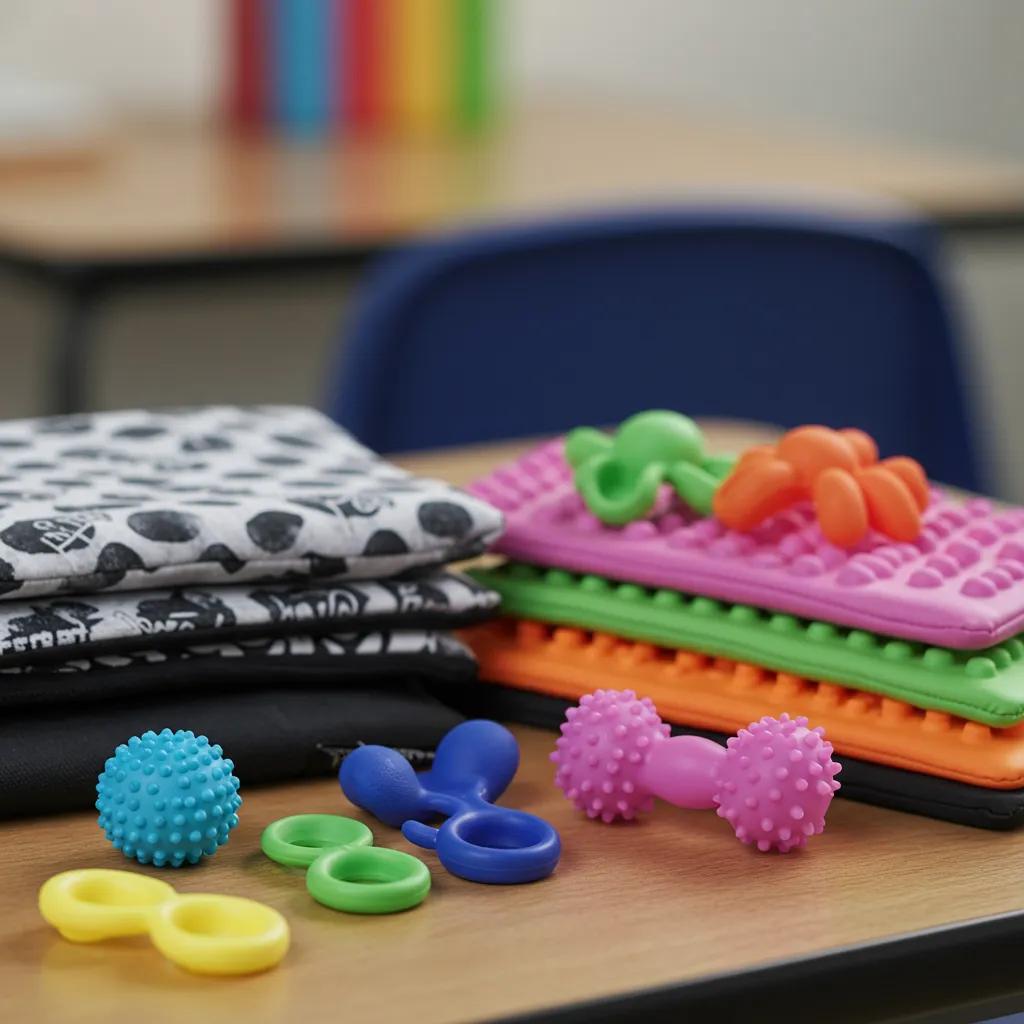
Calming tools deliver specific sensory input that supports attention and emotional regulation in teens. Weighted items such as lap pads or shoulder wraps increase proprioceptive feedback, which often reduces hyperarousal and improves seated tolerance for longer tasks. Tactile options like textured grips and soft silent fidgets provide focused sensory input that redirects scanning or stimming behaviors into controlled movements. For auditory sensitivity, low-profile noise-masking solutions lower perceived volume and improve speech-processing without isolating the student. Teachers can offer trials in class and observe whether a tool improves on-task behavior before formalizing any accommodation.
How do quiet fidget and tactile tools reduce sensory overload?
Quiet fidgets and tactile items reduce overload by reallocating excess sensory energy into a controlled, low-distraction movement or touch stimulus. Mechanistically, these tools act as bottom-up regulators: tactile input engages cutaneous receptors, and simple repetitive movement stabilizes arousal systems to support attention. Selection criteria should prioritize soundlessness, small footprint, and personal preference so the tool does not stigmatize the teen. Discuss classroom policies with staff and pilot tools during low-stakes activities to evaluate effectiveness while maintaining dignity for the student.
For families seeking guided assessment or a coordinated plan when tools alone aren’t sufficient, virtual mental health programs can offer structured evaluation and treatment planning. These programs provide clinician-guided tool trials and recommendations that align with school expectations, and families are encouraged to inquire about program intake for tailored support.
How Can Teens Manage Sensory Overload at School with Practical Strategies?
Teens can combine preventative planning, in-the-moment self-regulation, and discreet environmental tactics to manage sensory overload effectively. Preventative steps include creating a sensory plan before known triggers, packing preferred quiet tools, and preparing a brief script for communicating needs to staff. In-the-moment strategies focus on grounding, brief movement, and micro-breaks that restore regulation without pulling attention away from learning. The approach balances independence and collaboration with school staff while emphasizing safety and self-advocacy.
Below are practical self-regulation techniques teens can use during class or between periods.
- Deep breathing box technique: Slow inhale-counts and exhale-counts to lower physiological arousal and refocus attention.
- Two-minute standing stretch: Brief proprioceptive movement at the desk to release tension and reset focus.
- Grounding five-senses check: Quietly name five sensory details to orient and reduce panic.
- Micro-break cueing: Pre-arranged signal with teacher to take a short sensory break when needed.
These techniques work best when practiced regularly and combined with preferred quiet tools. Teens should rehearse strategies in low-stress contexts so they become automatic during busy school moments. For adolescents who need individualized self-regulation plans or help communicating needs to educators, virtual program assessments can support plan development and school-home coordination; consider an inquiry for program intake to build a tailored plan.
What Are Effective Sensory Processing Disorder Accommodations for High School Students?
High-school accommodations must respect adolescent autonomy while addressing sensory triggers that affect learning and testing. Effective supports include flexible seating options, scheduled or on-demand sensory breaks, testing modifications (private space or noise control), and low-sensory routes between classes. Accommodations aim to reduce exposure to known triggers, preserve access to curriculum, and enable self-management consistent with teen independence.
Different accommodations address distinct triggers and require clear roles for staff and family, as shown below.
| Accommodation | Trigger Targeted | Implementation Notes |
|---|---|---|
| Flexible seating (standing desk, movable chair) | Auditory and proprioceptive discomfort | Trial options in class; teacher documents observed benefits |
| Scheduled sensory breaks | Cumulative sensory fatigue | Build into daily schedule; align with teacher for minimal disruption |
| Modified testing environment | Noise and visual distractions | Offer small, quiet room or noise control; coordinate proctoring plan |
These options allow teams to match the accommodation to the student’s needs and monitor outcomes. Virtual clinicians can assist families in preparing documentation and planning meetings with school teams; inquiries for program intake help families access clinician support for 504 or IEP conversations.
Which environmental adjustments reduce sensory triggers in classrooms?
Simple environmental adjustments can substantially reduce common triggers for teens. Controls include dimmable or indirect lighting to avoid flicker-sensitive responses, strategic seating away from hallways to limit noise, and soft-surface areas to dampen reverberation. Low-cost pilots—such as testing a lamp or moving a desk for a week—help evaluate impact before broader changes. Teachers can document improvements in attention or behavior during trials to support requests for longer-term adjustments with administration.
How do schools implement quiet zones and sensory breaks for teens?
Schools can establish quiet zones and sensory break protocols by defining purpose, location, and staffing, then communicating access procedures to students and staff. A clear checklist includes identifying supervised spaces, setting allowable durations, training staff to escort students when needed, and tracking usage outcomes. Accessibility should be equitable, respecting students’ privacy and autonomy. Monitoring and data collection help demonstrate effectiveness and guide adjustments over time.
| Program Element | Staff Role | Outcome Metric |
|---|---|---|
| Quiet zone location | Designated supervisor | Use frequency and student-reported calm scores |
| Break protocol | Counselor/OT coordination | Reduced in-class disruptions |
| Accessibility plan | Administration oversight | Equitable access and policy adherence |
A coordinated approach ensures quiet zones serve teens without stigmatizing them, and schools can refine procedures based on tracked outcomes.
How Does Virtual Therapy Support Teens with Sensory Issues at School?

Virtual therapy supports teens by offering assessment, coaching, and coordination services that directly translate into in-school functioning. Telehealth occupational therapy consults evaluate sensory patterns, behavioral therapists coach self-regulation skills, and clinicians assist families with school communication and accommodation planning. Virtual sessions provide flexible access for teens and allow providers to observe routines, guide tool trials, and create school-friendly strategies.
What types of virtual therapy help teens manage sensory overload?
Several telehealth modalities address sensory overload in adolescents. Virtual occupational therapy focuses on sensory profiles and adaptive strategies to improve classroom tolerance. Behavioral therapy targets coping and executive skills that support regulation and task completion. Parent and teacher coaching sessions deliver communication templates and implementation tactics to align school and home supports. Families can expect targeted goals, regular progress checks, and practical homework to bridge sessions with the school day.
How can virtual therapy complement quiet sensory tools and strategies?
Virtual clinicians can guide tool selection, supervise at-home trials, and create written plans for school staff that detail triggers, effective tools, and break procedures. A common workflow includes assessment, trial of 1–2 quiet tools, outcome measurement, and development of a concise school communication template. When tools or strategies require formalization in a 504 plan or IEP, virtual clinicians help prepare documentation and coach families for meetings. If you’re considering structured virtual support, inquire about program assessments to determine next steps and coordinated plans aligned with school expectations.