
Teen Body-Focused Repetitive Behaviors Virtual Treatment: Effective Online Therapy for Skin Picking and Hair Pulling
Body-focused repetitive behaviors (BFRBs) in teens are repetitive actions—most commonly hair pulling (trichotillomania) and skin picking (excoriation disorder)—that cause tissue damage and significant distress. These behaviors emerge in adolescence for many and are best understood as behavioral health disorders within the obsessive-compulsive and related disorders spectrum, not merely bad habits.
This article explains how BFRBs present in teens, reviews evidence-based therapies such as Habit Reversal Training (HRT), CBT, DBT and the ComB model, and describes how virtual intensive outpatient programs adapt these treatments for adolescents. Readers will learn clear signs to watch for, practical parent strategies to reduce triggers at home, and when structured virtual care may be appropriate. The goal is to equip parents, educators, and clinicians with pragmatic steps and referral guidance for teens struggling with skin picking or hair pulling.
What Are Teen Body-Focused Repetitive Behaviors and How Do They Affect Adolescents?
Teen BFRBs are repetitive self-grooming actions focused on the body that become compulsive and impair functioning. The mechanism often involves conditioned responses to stress, sensory urges, and brief relief reinforcement, which strengthens the behavior over time and harms self-image and daily activities. Early onset in adolescence coincides with heightened emotional reactivity, making social and academic effects particularly common. Understanding these features clarifies why targeted behavioral treatments focused on awareness and competing responses can reduce symptoms and restore functioning.
What Is Skin Picking and Hair Pulling in Teens?
Trichotillomania and excoriation disorder manifest as recurrent hair pulling and skin picking respectively, producing visible hair loss, wounds, or scabs and repeated attempts to stop. These disorders differ from self-harm because the primary drive is an urge or sensory experience rather than intent to injure; they are hyponyms within obsessive-compulsive and related disorders. Teens often hide behaviors because of shame, which delays help-seeking and worsens medical and psychological consequences. Recognizing the clinical pattern—urge, action, relief, and shame—helps caregivers seek appropriate behavioral interventions.
What Are Common Symptoms and Signs of BFRBs in Adolescents?
The following checklist helps map observable behaviors to possible clinical severity and next steps in care. Use this as a screening aid and to inform discussions with a clinician.
- Visible hair thinning, bald patches, or irregular hair density on the scalp or eyebrows.
- Repeated skin lesions, scabs, or infections from focused picking on arms, face, or hands.
- Secretive behavior around grooming, ritualized touching, or extended periods spent on the behavior.
- Emotional signs such as anxiety, shame, avoidance of social situations, or co-occurring mood symptoms.
These signs often co-occur with anxiety or depression and warrant evaluation when they cause functional impairment or medical harm.
The pattern above links observable behavior (entity) → suggests underlying urge-driven mechanism (relationship) → which requires behavioral intervention (entity).
Which Evidence-Based Therapies Treat Teen BFRBs Effectively?

Effective teen BFRB treatment relies on behavioral and cognitive approaches that reduce urges and change habit loops. Habit Reversal Training (HRT) is first-line because it increases awareness and substitutes competing responses, while Cognitive Behavioral Therapy (CBT) and Dialectical Behavior Therapy (DBT) address cognitive triggers and emotion regulation that maintain behaviors. The Comprehensive Behavioral (ComB) model expands treatment by mapping sensory, cognitive, environmental, and emotional contributors so interventions target the teen’s unique profile. Current research and clinical practice indicate combining these modalities yields better outcomes than unsupervised attempts to stop.
Introductory comparison of primary therapies is shown below to clarify components and expected benefits for teens.
| Therapy | Key Components | Typical Benefit for Teens |
|---|---|---|
| Habit Reversal Training (HRT) | Awareness training, competing response practice, social support | Reduces frequency of pulling/picking by replacing the behavior |
| Cognitive Behavioral Therapy (CBT) | Cognitive restructuring, exposure to triggers, skill practice | Changes beliefs and responses that maintain urges |
| Dialectical Behavior Therapy (DBT) | Emotion regulation, distress tolerance, mindfulness | Helps teens cope with intense emotions driving BFRBs |
This comparison highlights how matching therapy components to a teen’s profile improves targeted outcomes and informs treatment planning.
Adolescent Mental Health offers virtual services delivered by licensed clinicians trained in HRT, CBT, and DBT within adolescent-focused programs for ages 12–17. These structured clinical options can be explored by families seeking a coordinated virtual treatment pathway.
How Does Habit Reversal Training Help Teens Manage BFRBs?
HRT reduces BFRBs by teaching teens to detect warning signs and use an incompatible action when urges arise. The core steps are awareness training, developing a short competing response, building motivation, and arranging social support to reinforce change. For example, a teen who picks at fingers may learn to clench a fist or use a tactile substitute for a minute when an urge occurs. Over time, repeated use of the competing response weakens the habit loop and reduces both frequency and intensity of urges.
Recent studies demonstrate the efficacy of virtual HRT for BFRBs in large real-world samples.
Virtual HRT for Teen Skin Picking & Hair Pulling: Clinical Outcomes
ObjectiveTo examine the effectiveness of virtual therapy-delivered habit reversal training (HRT) in large real-world samples of children, adolescents, and adults with trichotillomania and excoriation disorder.MethodsThe sample included 543 patients with trichotillomania (57 children, 75 adolescents, 408 adults) and 528 patients with excoriation disorder (40 children, 46 adolescents, 442 adults).
Treatment followed a protocol of twice-weekly HRT sessions, transitioning to weekly sessions. The Repetitive Body Focused Behavior Scale (RBFBS) was administered at baseline, weeks 5-7, weeks 14-16, and during maintenance periods through week 52.ResultsAt weeks 14-16, trichotillomania showed a median 33.33% severity reduction (IQR=11.11%-54.55%; 44.08% achieving ≥35% reduction) with large effects (Hedges’ g=1.01, 95% CI [0.88, 1.14]). Excoriation showed a median 33.33% reduction (IQR=12.50%-57.14%; 48.66% achieving 35% reduction; g=1.16 [1.02-1.30]).
What Role Do CBT and DBT Play in Adolescent BFRB Treatment?
CBT targets the thoughts and situational patterns that cue BFRBs and uses exposure and response prevention to reduce avoidance and urge strength. DBT complements CBT by strengthening emotion regulation and distress tolerance skills when BFRBs are primarily a reaction to overwhelming affect. Clinicians often integrate CBT techniques with DBT skills training to give teens tools for both cognitive restructuring and moment-by-moment coping. This blended approach addresses both the behavioral habit and the emotional drivers that sustain it.
Anxiety disorders are frequently comorbid with BFRBs in youth, highlighting the need for integrated treatment approaches.
Comorbidity of Anxiety Disorders and BFRBs in Youth
Anxiety disorders are one of the most common mental health concerns that affect youth. It is estimated about 9.4% of youth have an anxiety disorder such as panic disorder, generalized anxiety disorder, social anxiety disorder, separation anxiety disorder or specific phobias (CDC, 2022).The present study includes obsessive compulsive disorder and post-traumatic stress disorder as a part of the definition of anxiety disorders. Anxiety disorders can be comorbid with many mental health conditions. The focus of this study was on the comorbidity between anxiety disorders and body-focused repetitive behaviors (BFRBs) and related disorders. BFRBs are behaviors that involve repeated picking, pulling, and biting on areas of the body, marked by difficulty stopping the behavior (APA, 2022). This includes, but is not limited to, disorders such as trichotillomania (hair-pulling disorder) and excoriation disorder (skin-picking disorder). Some youth with anxiety disorders engage in BFRBs to s
How Does a Virtual Intensive Outpatient Program Support Teen BFRB Recovery?

A Virtual Intensive Outpatient Program (IOP) adapts structured treatment intensity to online delivery, combining individual therapy, group skills training, family sessions, and psychiatric consultation. The mechanism involves high-frequency sessions that reinforce new behaviors, monitor progress, and provide caregiver coaching so gains generalize to daily life. Virtual IOPs use secure telehealth platforms and coordinated care teams to maintain continuity and allow flexible scheduling around school. This model preserves evidence-based content while increasing access for families in diverse locations.
Before the following table, note that components are described to clarify roles each plays in recovery and how they interrelate.
| IOP Component | What It Is | How It Helps in BFRB Recovery |
|---|---|---|
| Individual therapy | One-on-one HRT/CBT sessions | Personalized habit assessment and response training |
| Group therapy | Skills groups and peer support | Builds motivation and models coping strategies |
| Family therapy | Caregiver coaching and communication work | Aligns home environment and supports consistency |
| Psychiatric consultation | Medication evaluation when needed | Manages co-occurring conditions that worsen BFRBs |
This table shows that combining individual skill-building with family involvement and psychiatric oversight creates a comprehensive, multi-component pathway for adolescent BFRB recovery.
Adolescent Mental Health’s Virtual IOP is designed for teens aged 12–17 and provides licensed-clinician-led delivery of these components, offering families a convenient, structured route to submit inquiries or begin admissions for treatment evaluation.
What Are the Components of a Virtual IOP for Teen BFRBs?
Typical Virtual IOPs include multiple weekly contacts: individual HRT/CBT sessions, group skills classes for peer learning, scheduled family sessions for caregiver coaching, and psychiatric follow-up for medication management when indicated. Progress monitoring uses symptom tracking and functional goals to adjust intensity and targets. Clinicians coordinate across modalities so awareness training and competing responses practiced in individual sessions get reinforced in groups and at home. This integrated cadence strengthens skill generalization and allows timely clinical adjustments.
What Are the Benefits of Online BFRB Treatment for Teens and Families?
Online treatment increases access by removing travel barriers and allowing scheduling around school commitments, which improves adherence and consistency. Virtual delivery reduces stigma by enabling discreet participation and facilitates direct caregiver involvement through family coaching sessions. Telehealth supports continuity of care across relocations and leverages digital tracking tools for real-time monitoring. These benefits make virtual IOPs a practical option for many families seeking intensive, evidence-based adolescent care.
How Can Parents Support Teens with Body-Focused Repetitive Behaviors?
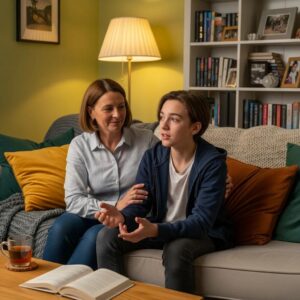
Parents play a central role by reducing triggers, teaching competing responses, and fostering a nonjudgmental environment for change. Effective support focuses on collaborative problem solving, not punishment, and includes modeling coping skills and arranging sensory substitutes. Communication that validates feelings while setting consistent, gentle limits supports skill practice and reduces shame. When home strategies are insufficient or behaviors cause medical harm, professional intervention should be considered.
What Practical Strategies Help Parents Manage Teen Skin Picking and Hair Pulling?
Parents can implement low-burden, evidence-aligned tactics to reduce opportunities for BFRBs and to increase alternative coping strategies. Start by identifying high-risk situations and gently modifying environments to reduce cues. Provide tactile substitutes and schedule brief competing-response practice times. Praise effort and small improvements rather than focusing exclusively on symptom elimination. These steps increase a teen’s agency and support consistent practice of new behaviors.
- Reduce identified triggers in the environment to lower spontaneous urge activation.
- Offer approved sensory substitutes that are acceptable to the teen when urges arise.
- Encourage brief, structured practice of competing responses with positive reinforcement.
These practical measures create a safer, more supportive context for clinical interventions to work effectively.
When Should Parents Seek Professional Virtual Treatment for Their Teen?
Seek professional care when BFRBs cause functional impairment, repeated tissue damage, infection risk, or when the teen reports uncontrollable urges despite home strategies. Additional red flags include severe distress, declines in school performance, and co-occurring anxiety or depression that interferes with daily life. In such cases, a Virtual IOP can provide intensive, structured therapy with licensed clinicians trained in adolescent HRT, CBT, and DBT. Families interested in a program evaluation can inquire about admissions to Adolescent Mental Health’s Virtual IOP for assessment and treatment planning.