

If your teenager is struggling with anxiety, depression, or school avoidance, you are not alone – and you have more treatment options today than ever before. Online therapies have matured from a pandemic workaround into a fully established, research-backed approach to adolescent mental health care. This guide walks families through exactly how virtual treatment works in 2026, what the evidence says, and how to determine whether a program like a virtual Intensive Outpatient Program is the right fit for your teen.
Key Takeaways
-
Online therapy is now a mainstream, evidence-based option for teen mental health treatment in 2026, often as effective as in person therapy for anxiety, depression, and behavioral concerns.
-
Adolescent Mental Health provides a virtual Intensive Outpatient Program (IOP) for teens ages 12–17 nationwide via secure video, combining individual, group, and family therapy.
-
Teens attend sessions from their own home during after-school or evening hours, making it easier to balance treatment with busy schedules, sports, and schoolwork.
-
Many commercial insurance plans cover online therapy and IOP services, helping families access affordable therapy rather than paying fully out of pocket.
-
Virtual IOP fills the gap for teens who need more than weekly therapy visits but less than hospitalization – particularly for anxiety, depression, ADHD, and school avoidance.
What Is Online Therapy – And How Is It Different in 2026?
Online therapy – also called telehealth or telemental health – refers to real-time video sessions between a teen and licensed therapists or other mental health providers, conducted over secure, HIPAA-compliant platforms. While the concept existed before 2020, the COVID-19 pandemic accelerated adoption dramatically, and by 2026 these services are a permanent fixture in mental healthcare.
Common formats include:
-
Weekly outpatient video therapy – standard talk therapy sessions (45–60 minutes) for symptoms like stress, mild anxiety, or relationship issues.
-
Text or chat-based support – asynchronous messaging for lighter emotional support between sessions. Patients can choose between live video sessions, phone calls, or text messaging depending on the platform.
-
Psychiatry and medication management – short video visits with psychiatric providers for evaluation, diagnosis, and medication support.
-
Virtual Intensive Outpatient Programs (IOPs) – structured, multi-day programs combining group, individual, and family therapy for moderate-to-severe mental health conditions.
The clinical standards are the same as traditional therapy: licensed therapists use the same evidence-based care, hold the same credentials, and follow the same ethical guidelines whether they see clients through a screen or at a therapist’s office. At Adolescent Mental Health, all teen treatment is delivered virtually by licensed mental health professionals and psychiatrists trained specifically in adolescent mental health.
Benefits of Online Therapies for Teens and Families
Research conducted between 2022 and 2025 consistently shows that virtual therapy can match in person sessions in outcomes for many teen anxiety, depression, and behavioral concerns. A 2022 meta-analysis of 37 randomized controlled trials found remote psychotherapy for youth produced a pooled effect size of 0.47, comparable to in person delivery. Online therapy is proven effective for treating depression, and it effectively reduces anxiety symptoms – over 95,000 patients have accessed online counseling services, with 95,000 patients accessing online counseling for anxiety alone.
Key advantages for families:
-
Convenience. Teens attend therapy from home after school, with evening options that don’t disrupt classes, sports, or parent work schedules. Online therapy can reduce transportation costs and time requirements for clients. In fact, 98% of users found services like Talkspace more convenient than face to face therapy.
-
Access. Online therapy eliminates geographical barriers to mental health care access, helping families in rural or specialist-scarce areas find a therapist with extensive experience in teen issues. Online therapy increases accessibility for people with physical disabilities or those in remote areas, and it allows access to a wider range of mental health professionals.
-
Comfort and privacy. Many teens feel anxious in clinical waiting rooms. Online therapy allows clients to communicate from a comfortable and familiar environment – their own home – and helps reduce stigma associated with in person therapy due to increased privacy.
-
Continuity of care. Virtual therapy reduces barriers to care and increases treatment consistency. Online therapy can facilitate continuity of care during travel or illness, keeping treatment on track through school breaks, vacations, or moves.
-
Family involvement. Online family therapy can improve family dynamics and communication. Separated or busy co-parents join from different locations, and online family therapy supports parenting stress and conflict cycles.
-
Evidence. Online therapy is proven to be as effective as in person therapy. Online therapy can help manage symptoms of persistent sadness, and structured therapy significantly improves coping skills for anxiety. Online therapy helps manage excessive worry and panic attacks. Online therapy is effective for adolescents’ mental health challenges, and it can reduce barriers to accessing mental health care.
Types of Online Therapies Available in 2026
“Online therapy” is a broad term covering many service levels, from a single consultation to intensive virtual programs. Online therapy provides accessible mental health support through various digital formats. Many online therapy platforms offer support specifically for teens, and adolescents can receive therapy for anxiety, depression, and stress through these services.
-
Weekly individual therapy – 45–60 minute video sessions with a licensed therapist addressing symptoms like stress, mild depression, or relationship issues. Talk therapy for teens remains a highly effective starting point.
-
Online group therapy – small groups of 6–10 teens meet weekly on video to practice skills, share experiences, and receive peer support under therapist guidance. Some virtual IOPs include roughly 9 hours of group sessions per week.
-
Family therapy online – families join via separate devices or locations to address communication, conflict, and shared plans for supporting a teen at home and school. Counseling Now provides online family counseling for transitions, and 7 Cups offers online therapy for family issues. Families can access therapy from home using telehealth services.
-
Virtual Intensive Outpatient Programs (IOPs) – 3–5 days per week, roughly 3 hours per day, of structured online care. Adolescent Mental Health offers this for teens 12–17 who need more support than weekly person therapy. Examples of virtual therapy approaches include Cognitive Behavioral Therapy and Dialectical Behavior Therapy.
-
Online psychiatry and medication management – short video visits with a psychiatrist for teens for evaluation, diagnosis, and medication monitoring for conditions like depression, anxiety, and ADHD. Cognitive behavioral therapy is commonly used for depression treatment alongside medication when needed.
-
Self-guided digital tools – apps and online courses offering CBT modules, mood tracking, or mindfulness exercises. These are supplements, not replacements, for licensed therapists. Evidence-based therapies include mindfulness techniques and stress-reduction tools that can be practiced between therapy sessions.
How Online Therapy Works Step-by-Step for Teens
The process is structured and predictable, which helps parents know what to expect from first contact through ongoing care. Many clients can schedule an online therapy appointment within a week, and many clients can schedule an online counseling appointment within the same week.
-
Step 1 – Initial inquiry and screening. Caregivers contact Adolescent Mental Health online or by phone, share mental health concerns (school refusal, racing thoughts, panic attacks, self-harm thoughts), and complete a brief screening. Most programs respond within 24–48 business hours.
-
Step 2 – Insurance verification and cost estimate. Staff check whether the family’s health insurance covers online therapy services or online IOP, verify copays or deductibles, and provide an upfront cost range before scheduling.
-
Step 3 – Matching with a licensed therapist. Matching is based on the teen’s age (12–17), clinical needs (depression, ADHD, gender dysphoria), schedule, and state of residence. Therapists use developmentally appropriate techniques for teens, and many therapists hold specializations in specific needs like anxiety disorder and ADHD.
-
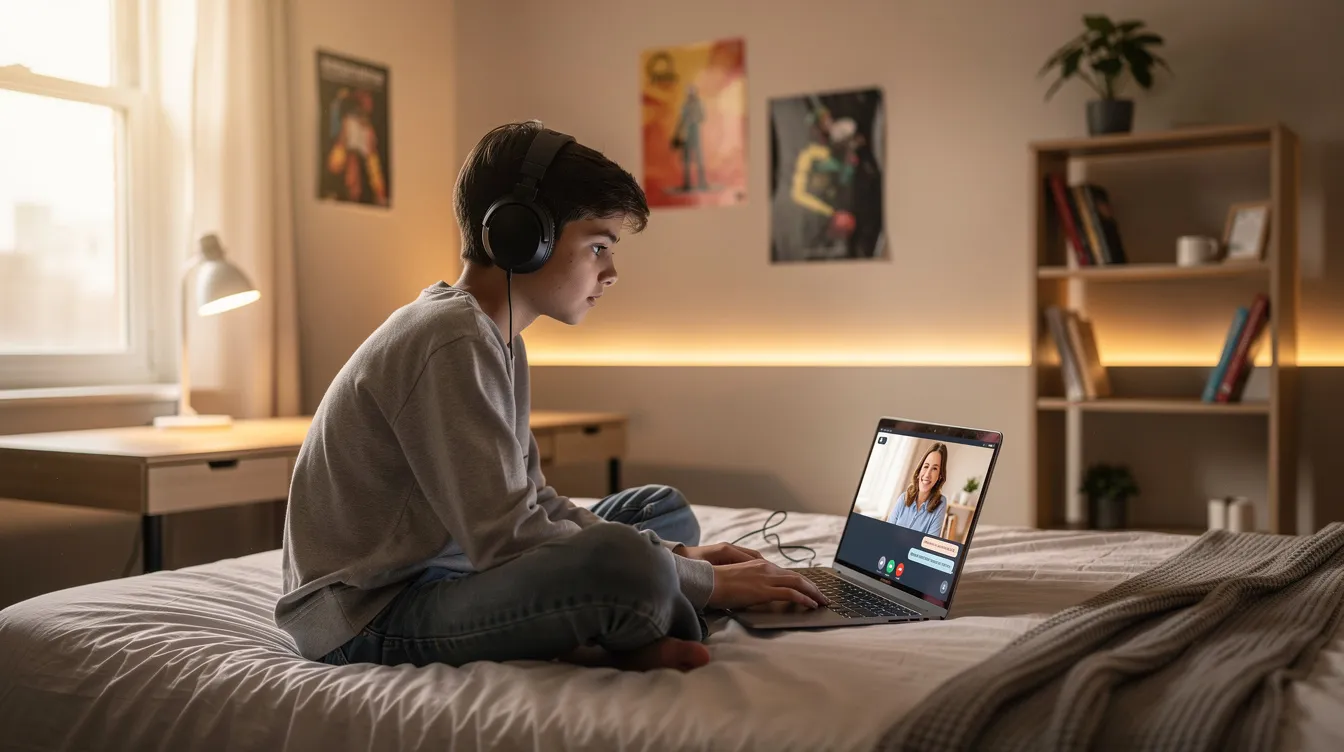
Step 4 – Tech setup. Families test the video link, use a laptop or tablet with a camera, wear headphones, and find a private space where the teen feels comfortable.
-
Step 5 – First online session. Introductions, review of confidentiality limits, discussion of goals (e.g., reducing panic attacks before fall 2026), and creation of a safety plan if needed. The therapist and teen build a personalized plan together.
-
Step 6 – Ongoing sessions. Frequency varies: multiple times per week for IOP, weekly or bi-weekly for outpatient. Regular check-ins track symptoms, and the treatment plan is adjusted based on progress.
-
Step 7 – Coordination with schools and pediatricians. With consent, providers may share attendance letters, accommodation recommendations, or progress updates with schools and health services.

Online Intensive Outpatient Program (IOP) at Adolescent Mental Health
A virtual IOP for teens is a structured program that sits between weekly therapy and inpatient or residential care. It is delivered fully online to teens ages 12–17 who need intensive, consistent treatment without leaving home.
-
Who it is for. Teens with moderate to severe anxiety, depression, school avoidance, self-harm behaviors without immediate medical risk, ADHD with major school impact, or gender dysphoria-related distress. Learn more about when IOP is the right level of care.
-
Program structure. Typically 3–4 days per week of online sessions, including separate blocks for group therapy, individual therapy, and family therapy, with after-school hour options.
-
Evidence-based therapies used. Cognitive behavioral therapy CBT is a common evidence-based therapy at the core of the program. Dialectical Behavior Therapy (DBT) is also widely used online, alongside behavioral activation and family-based interventions.
-
Parent and caregiver involvement. Weekly parent coaching or parent groups via video focus on communication, boundaries, and supporting treatment goals at home. This emotional support component is critical to outcomes.
-
Safety and crisis procedures. Safety planning, daily check-ins, and coordination with local emergency and in person resources occur if a teen’s risk escalates. The 988 Suicide & Crisis Lifeline is included in every safety plan.
-
Transition planning. The team collaborates with families to step teens down to weekly online counseling, school supports (IEPs, 504 plans), or community services once IOP goals are met.
Online Therapy vs. In-Person Care: What Families Should Consider
Both online and in person care can be effective. Online therapy is proven to be as effective as in person therapy for many conditions. Online therapy can be as effective as in person therapy when it includes consistent provider contact and skill-building. The choice depends on clinical needs, safety, family logistics, and teen preference.
-
Where online care excels. Teens with transportation barriers, rural families, high-performing students with full schedules, or those who feel anxious in clinical settings often thrive with virtual counseling. Online therapy offers flexibility and accessibility for depression treatment specifically.
-
When in person or higher-level care is needed. Active psychosis, severe substance use, recent suicide attempts, or situations requiring 24/7 observation warrant inpatient vs. outpatient evaluation.
-
Hybrid models. Some families combine local in person psychiatry with online therapy or IOP for more frequent skill-building. Phone sessions or virtual counseling can supplement face to face visits.
-
Engagement and privacy. Home distractions, lack of private space, or technology issues can be challenges. In contrast, in person sessions mean commuting and wait times. Both approaches have trade-offs.
-
Clinical outcomes. Large-scale data from 2022–2025 shows equivalent or better adherence and symptom improvement for many telehealth programs compared to traditional therapy, including DBT-based virtual IOPs versus in person IOPs.
How to Find a Therapist or Online Program for Your Teen
Searching for the right provider can feel overwhelming. Online directories and virtual programs have changed how families find a therapist, but the fundamentals still matter.
-
Clarify your teen’s needs. List current symptoms (panic attacks, school refusal since fall 2025, persistent sadness), diagnoses, medications, and prior treatment approaches. This helps mental health providers match appropriately.
-
Check licensure and credentials. Confirm the professional is a licensed therapist (LCSW, LMFT, LPC, psychologist) or psychiatric provider in your state. Interstate compacts like PSYPACT allow some providers to practice across state lines.
-
Ask about teen expertise. Inquire about age range served, experience with adolescent anxiety, depression, ADHD, school avoidance, or identity concerns.
-
Explore online IOP options. For teens needing more than weekly online care, search for “virtual intensive outpatient program for teens” and ask about schedule, length, and family involvement.
-
Consider fit. Schedule an initial consultation and notice if the teen feels heard, respected, and comfortable. The right therapist makes all the difference.
-
How Adolescent Mental Health supports this step. A dedicated admissions coordinator helps families determine whether their teen is better suited for online IOP or standard outpatient treatment, then handles insurance verification and scheduling.
Costs, Insurance, and Affordable Online Therapy Options
Cost is one of the biggest barriers to mental health care. Families should clarify insurance details before committing to begin treatment.
-
Does insurance cover online therapy? Insurance coverage for online therapy varies by plan and state. However, over 40 states have telehealth coverage parity laws, and many insurance plans continue covering telehealth through 2026. Most major health insurance plans cover services like Talkspace therapy, and many employers cover Talkspace therapy for free, with most insured members having a $0 copay. Counseling Now accepts most insurance plans, including Medicaid.
-
Insurance and IOP. Online IOP is typically billed similarly to in person intensive outpatient services. Pre-authorization from insurers is sometimes required. Check whether Cigna covers therapy or verify your specific plan.
-
Typical out-of-pocket costs. Standard online sessions may range from small copays ($0–$40 depending on plan). Self-pay IOP can be significantly higher per week. A monthly fee structure varies by provider. Open Path charges a one-time membership fee of $65 for therapy access as a low-cost alternative.
-
Verifying benefits. Contact both your health plan and the provider. Ask about telehealth coverage, deductibles, and whether you owe a copay for each therapy visit.
-
Affordable therapy strategies. Use in-network mental health providers, ask about sliding scale rates, explore employee assistance programs (EAPs), school-based counseling, and community clinics as complements or step-down options from IOP.
-
How Adolescent Mental Health helps. The team checks eligibility, confirms whether insurance can cover online therapy and IOP, and presents families with clear, written cost estimates before treatment begins.
Ensuring Safety, Privacy, and Quality in Online Mental Health Care
Reputable online mental health providers follow the same laws and professional standards as brick-and-mortar clinics. Patients and clients are protected by the same regulatory frameworks regardless of delivery format.
-
HIPAA-compliant platforms. Secure, encrypted video platforms – not public apps or social media – protect teen confidentiality during all therapy sessions.
-
Confidentiality and its limits. Standard privacy rules apply, with exceptions for safety: risk of harm to self or others, and abuse reporting obligations. Therapists confirm the teen’s physical location each session for emergency jurisdiction purposes.
-
Safety planning. Online therapists create concrete crisis plans including coping skills, safe adults, the 988 hotline, and local emergency contacts. This is an important factor in any quality program.
-
Verifying provider quality. Check licenses with state boards, read independent reviews, and ask about supervision, training, and clinical outcomes. Look for programs that track and report patient data.
-
How Adolescent Mental Health addresses safety. Structured risk assessments, regular check-ins, parent involvement, and coordination with local emergency and in person health services when necessary ensure your teen’s mental well being is always the priority.

Frequently Asked Questions About Online Therapies for Teens
Is online therapy really as effective as in-person care for teenagers?
Yes. Multiple peer-reviewed studies from 2020–2025 found that online CBT and DBT-based interventions for youth anxiety and depression produce outcomes comparable to in person treatment when sessions are consistent and therapist-led. Online therapy is proven to be effective as in person therapy across a range of mental health needs for adolescents.
How do I know if my teen needs an online IOP instead of weekly therapy?
Consider IOP if your teen’s symptoms have interfered with school attendance for at least one academic term, if they have self-harm behaviors without current medical emergency, if multiple rounds of weekly therapy have not produced sufficient change, or if frequent crises at home are disrupting daily life. If you are unsure, request a formal assessment from a provider who can evaluate the right level of care.
Can online therapists prescribe medications for my child?
Only certain licensed medical providers – psychiatrists, psychiatric nurse practitioners, and some pediatricians – can prescribe. Many now offer online medication management visits that coordinate closely with your teen’s therapist. Telepsychiatry prescribing flexibilities for controlled substances are currently extended through December 31, 2026.
What if my home is not very private or my teen refuses to turn on their camera?
Practical solutions include using headphones to block sound, sitting in a parked car or quiet corner, or scheduling when other family members are out. Camera use can be negotiated collaboratively with the therapist – starting with audio-only and gradually introducing video as trust builds. Visual contact generally produces better results, but flexibility helps engagement.
How quickly can our family start online treatment with Adolescent Mental Health?
Most families complete an initial screening within a few business days. Full online IOP admission, when clinically appropriate, typically happens within 1–2 weeks. Timelines can vary by season, state licensing requirements, and insurance approval. Visit today by contacting the admissions team online or by phone to take the first step toward getting your teen the support they need.