
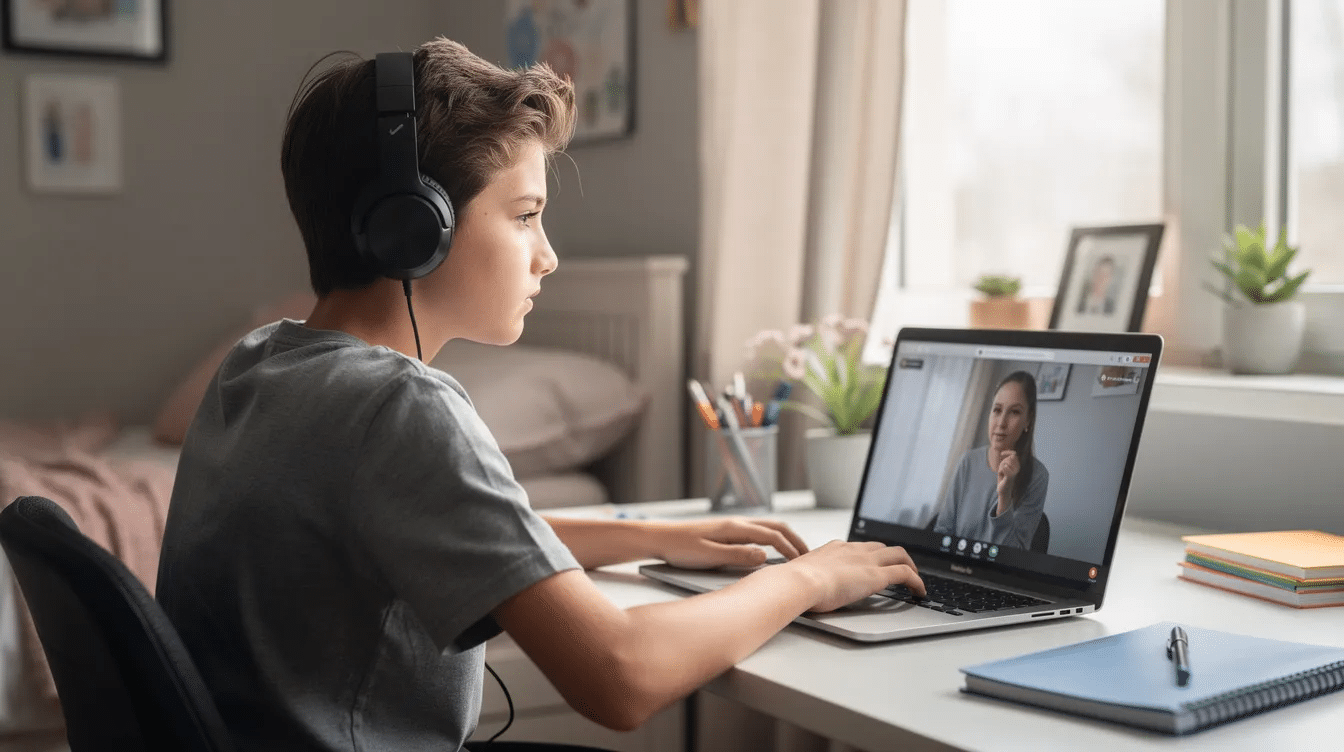
Every parent has seen it: their teenager glued to a phone, oblivious to dinner, homework, and the world outside the screen. Many parents wonder whether this is normal adolescent behavior or something more concerning. The answer, backed by neuroscience and recent research, is that modern screens are designed to be deeply engaging, and the adolescent brain is uniquely vulnerable to their pull.
Key Takeaways
-
Screens hook a person’s brain through the dopamine reward system, delivering fast, unpredictable rewards via social media, gaming, and endless scrolling that create a powerful dopamine feedback loop similar to what researchers observe in substance and gambling addictions.
-
Addictive use of electronic devices is more dangerous for mental health than total screen time alone, particularly for adolescents whose developing brains have weakened impulse control and heightened reward sensitivity.
-
Screen addiction can negatively impact sleep, school performance, mood, and social relationships, and can worsen anxiety, depression, and ADHD symptoms.
-
Parents can set reasonable limits, model healthy screen use, and create screen free times, but some teens will need professional help such as CBT-based virtual therapy.
-
Adolescent Mental Health offers a virtual intensive outpatient program (IOP) for teens ages 12–17 who need structured treatment for screen addiction and co-occurring mental health issues.
How Screens Hook The Brain’s Reward System
Modern apps, video games, and social media platforms are not built to be used and put down. They are built to maximize engagement, which means keeping the user on the platform as long as possible. Every notification, every new video in an infinite feed, every “like” on a post is part of an architecture designed to capture and hold attention.
At the center of this process is dopamine, a neurotransmitter often called the brain’s “pay attention, this matters” chemical. Dopamine release occurs during addictive behaviors of all kinds, from playing video games to scrolling social media to checking text messages. When a teen receives a like on a post or wins a round in a game, dopamine surges in the nucleus accumbens, the same region activated by nicotine, gambling, and even in cocaine users. This does not mean screens are identical to drugs, but behavioral addictions engage the same brain mechanisms as traditional addictions, and the dopamine feedback loop that forms is strikingly similar.
What makes screen addiction especially persistent is the role of variable rewards. Just like slot machines, social media platforms and mobile games deliver unpredictable rewards: sometimes a post gets dozens of likes, sometimes almost none. Variable reward schedules keep users engaged longer similar to slot machines, and unpredictable rewards drive users to frequently check their devices. Dopamine reinforces habits, leading to addiction, and over time, users develop a tolerance and require more content for the same satisfaction.
Screen addiction hijacks the brain’s reward systems through continuous dopamine release. The continuous stream of novelty-new videos, messages, posts-trains the brain to crave constant stimulation. Instant access to stimulation reduces tolerance for patience or discomfort, making quiet offline activities like reading, homework, or even spending time with friends feel flat and boring. The brain longs for the next hit of stimulation, and the cycle deepens.
Why Adolescent Brains Are More Vulnerable To Screen Addiction
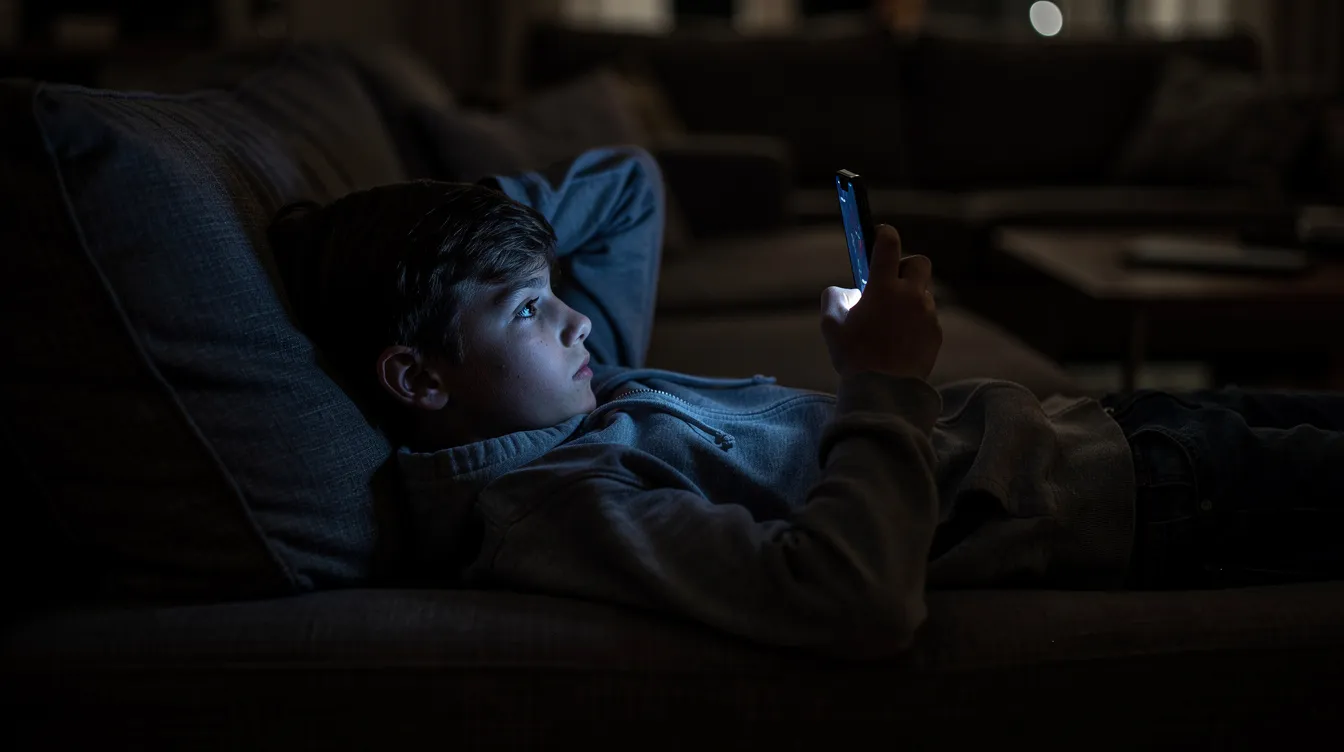
Teen brains, roughly ages 12 to 25, are still under construction. This is not a metaphor. The reward system (limbic system) matures years before the prefrontal cortex, the region responsible for impulse control, planning, and weighing long-term consequences. Adolescents’ brains are more sensitive to dopamine surges, which means the thrill of a new notification or a win in a game registers far more intensely than it does for most people over 25. Dopamine drives compulsive screen use in children and adolescents precisely because their neural “brakes” are not yet fully developed.
This neurobiological mismatch is a big factor in why adolescents are more vulnerable to screen addiction due to brain development. Social validation-likes, followers, streaks-is biologically extra powerful during this period. Fear of Missing Out drives the compulsive checking of social media, and online peer culture pulls kids to stay constantly connected, even during homework, meals, and late at night.
Teens with pre-existing conditions such as anxiety, depression, ADHD, or school avoidance may particularly gravitate toward screens as a coping mechanism. Research from the ABCD longitudinal study found that early adolescent problematic screen use predicted increases in depressive symptoms, sleep disturbance, and even substance use initiation a year later. For these children, screen use becomes both the escape and the reinforcing cycle that makes everything harder.
Addictive Use Vs. “Too Much” Screen Time
Parents worry about how many hours their teen spends on devices, and that concern is valid. But the research tells a more nuanced story. Heavy screen time-say, several hours spent on schoolwork, creative projects, or coding-is very different from addictive use that disrupts daily life. There is no one size fits all number that separates healthy from harmful.
Addictive screen use is defined by patterns where the person feels unable to cut back, continues despite clear negative consequences, and relies on screens to manage emotions. A large Chinese study of roughly 13,240 adolescents found that while about half (48.2%) had excessive leisure screen time, only about 1.4% met criteria for Internet Gaming Disorder. But those with diagnosable addictive use had dramatically higher odds of depression (OR ~6.43) compared to those with high screen time alone.
Consider two teens who each spend three hours on mobile devices after school. One is editing music and chatting with friends in a creative community. The other is doom-scrolling social media to avoid painful feelings of anxiety, unable to stop even when they know they should. From a mental health perspective, the quality and function of screen use-coping, escape, compulsive checking-matter far more than the clock. Parents and clinicians should focus on loss of control, withdrawal-like reactions, and neglect of responsibilities rather than chasing a single “magic” number.
Signs Your Teen May Be Addicted To Their Phone Or Other Screens
Most teens love their devices, and that alone is not cause for alarm. But certain warning signs suggest true cell phone addiction or screen addiction that warrants attention.
On the behavior side, watch for extreme meltdowns or dysregulation when asked to stop using a device. Children may become grumpy when asked to stop using screens, and irritability may occur when screen access is restricted. Sneaking devices after bedtime, lying about screen use, or bypassing parental controls are also red flags. Withdrawal symptoms include moodiness and disrupted sleep when devices are unavailable.
Socially and academically, a teen who is pulling away from friends and family, skipping other activities they used to enjoy, or showing falling grades and chronic lateness with homework may be showing signs of a deeper problem. Neglecting important life areas indicates potential screen addiction, especially when the teen previously functioned well in those areas.
Emotionally, needing screens to feel “okay,” using gaming or social media to escape difficult feelings, or becoming highly anxious when disconnected are important signs. Physically, look for staying up past midnight on devices, constant fatigue, headaches, and decline in basic self-care. Between 50% to 90% of daily computer users report digital eye strain, and teens glued to screens for hours are no exception to physical symptoms like eye strain, neck pain, and disrupted sleep.
How Screen Addiction Affects Teen Mental Health
Screen addiction rarely occurs in isolation. It typically interacts with and amplifies conditions like anxiety, depression, ADHD, and school avoidance. According to the CDC, teens reporting four or more hours of daily screen time are over twice as likely to experience depressive symptoms (25.9% vs 9.5%) and anxiety (27.1% vs 12.3%) compared to peers with less time spent on screens. Four or more hours of daily screen time increases depression risk significantly, and screen use can increase emotional stress by 19% compared to professional use.
Excessive screen use can disrupt sleep quality and melatonin production, since blue light from devices suppresses the hormone responsible for regulating sleep cycles. Excessive screen time can also disrupt sleep quality and lead to insomnia. Poor sleep then cascades into worse mood, impaired focus, and greater emotional reactivity during the school day. For teens with ADHD, the rapid-fire content of short-form video and gaming can intensify attention problems and make schoolwork or reading feel almost impossible. Dopamine release is linked to hyperarousal during gaming, which further fragments the ability to self regulate.
Social media facilitates constant comparison impacting self-esteem, body image, and sense of belonging, especially for adolescent girls and LGBTQ+ youth. Cyberbullying and FOMO can increase stress and may contribute to self-harm thoughts in vulnerable teens. Excessive screen time can lead to social isolation in children, and digital socialization can lead to feelings of social isolation even when a teen appears “connected” online. Screen addiction can lead to anxiety and depression, and it can lead to anxiety and social isolation as offline relationships deteriorate.

Why Tech Companies Want You To Stay Glued To Your Screen
Social media platforms, streaming services, and games profit from how long users stay engaged-not from how healthy that engagement is. Attention is the currency of the digital economy, and technology companies have invested billions in making their products as addictive as possible.
Platforms are designed for endless scrolling and constant engagement. Specific design features include infinite scroll, autoplay, push notifications, streaks, “recommended for you” feeds, and in-game rewards that encourage longer sessions. Algorithms and autoplay features eliminate natural stopping cues, so a teen who opens TikTok to watch “one video” can easily lose an hour. EU regulators recently declared TikTok’s design addictive under the Digital Services Act, citing its infinite scroll, personalized recommendation system, and push notifications as features that harm minors.
These algorithms learn what captures each teen’s attention-emotionally charged media, certain creators, specific topics-and then serve more of that content in a reinforcing habits cycle. Notifications and multitasking fragment attention and reduce focus, and constant notifications diminish attention span and impair cognitive function over time. These systems are not evil “characters,” but business models optimized for attention. That is precisely why families need to create boundaries proactively. Teens are not “weak” for struggling to log off; they are interacting with tools intentionally built to be engaging and habit-forming.
Setting Reasonable Limits And Building Healthier Screen Habits At Home
The good news: parents cannot and do not need to eliminate screens entirely. The goal is to shift how, when, and why teens use them.
Start with concrete household strategies. Set tech-free zones in your home to reduce screen use, particularly bedrooms and the dinner table. Establish device-free meals where cell phones stay in another room. Create a screen-free window an hour before bed to protect sleep. Encourage teens to take a three-to-four-hour break from screens daily, filled with physical activity, creative pursuits, or face-to-face time with friends.
Collaborate with your teen on a “family media plan” that sets reasonable limits and clear consequences, taking into account school demands and the teen’s unique needs. Encourage alternative activities like baking or hiking, sports, music, art, volunteering, or clubs that meet social and emotional needs in ways that screens cannot. For parents themselves: limit personal screen time to 30 minutes of recreational scrolling daily when you can, and model responsible screen use to influence children positively. Keeping your own phone off the table at dinner and avoiding constant scrolling in front of kids sends a powerful message. There is no substitute for what you demonstrate with your own behavior.

When Home Strategies Aren’t Enough: Getting Professional Help
Some families try every rule and reward system they can think of, but the teen’s addictive screen use still escalates or creates serious conflict. When severe mood swings accompany screen limits, when school refusal sets in, when self-harm thoughts emerge, or when a teen withdraws completely from offline life-it is time to seek professional help.
Evidence-based therapies like Cognitive Behavioral Therapy (CBT) and Dialectical Behavior Therapy (DBT) help teens understand triggers, build coping skills, and practice replacing compulsive screen use with healthier strategies. Research shows that psychological interventions over 2 to 12 weeks can produce meaningful reductions in problematic technology use among adolescents.
Adolescent Mental Health’s virtual Intensive Outpatient Program (IOP) serves teens ages 12–17 with multiple therapy sessions per week, including group and family therapy. The program addresses co-occurring issues such as depression, anxiety, ADHD, and school avoidance alongside screen-related concerns. Treatment is delivered online, within the teen’s digital world but with structure, therapist guidance, and insurance-friendly coverage, making treatment options accessible for many families.
How Adolescent Mental Health Supports Families Struggling With Screen Addiction
Adolescent Mental Health is a telehealth treatment center built specifically for adolescent behavioral health and mental health. The program understands that screen addiction is rarely the only issue a teen is facing, and treatment plans reflect that complexity.
The IOP structure includes several days per week of virtual group therapy, regular individual therapy, and family therapy sessions to address patterns around screen use at home. Clinicians use CBT to challenge unhelpful thoughts about social media and gaming, DBT to build emotion regulation and distress tolerance, and parent coaching to help families set and maintain reasonable limits. Treatment plans are tailored for teens with anxiety, depression, ADHD, gender dysphoria, and school avoidance, integrating screen addiction support into broader teen mental health care.
If you are wondering whether your teen’s relationship with technology has crossed a line, reach out for a brief consultation. The team can help you verify insurance coverage and discuss whether virtual IOP is the right fit for your teen’s needs.
Frequently Asked Questions
Is screen addiction an official diagnosis for teens?
While the WHO recognizes “Gaming Disorder” as a formal diagnosis in the ICD-11, broader terms like screen addiction and cell phone addiction are not yet universally accepted as standalone diagnoses. Clinicians focus less on labels and more on functional impact: sleep disruption, school problems, mood changes, and inability to cut back despite clear negative consequences. At Adolescent Mental Health, therapists assess the teen’s overall psychological problems, screen use patterns, and family dynamics to determine the best treatment plan regardless of diagnostic wording.
How much daily screen time is healthy for a teenager?
There is no one size fits all number because teens use screens for school, socializing, hobbies, and entertainment. Rather than fixating on hours, parents should look at balance: is the teen getting adequate sleep, engaging in physical activity, maintaining in-person friendships, and managing stress? Use pediatric guidelines and a family media plan as a starting point, then adjust based on behavior, mental health, and whether the teen can follow agreed-upon rules without major conflict.
Can screens ever be positive for my child’s mental health?
Yes. Screens can provide social support, educational opportunities, creative outlets, and access to health services like virtual therapy. The goal is not zero screen time but intentional screen time: choosing content and platforms that build skills, relationships, and well-being rather than fueling comparison or conflict. Adolescent Mental Health’s own treatment model uses secure online sessions to bring effective care directly into families’ homes, turning technology into part of the solution rather than only the problem.
What if my teen refuses to talk about their screen use or gets angry when I bring it up?
Stay calm, avoid shaming language, and focus on specific concerns like grades, sleep, or mood rather than attacking the teen’s character. Pick neutral times to talk, not mid-argument, and use open-ended questions that express curiosity rather than ultimatums. Involving a neutral third party such as a therapist can lower defensiveness. In Adolescent Mental Health’s program, family sessions create a safer space to address conflicts around devices without the conversation devolving into a power struggle.
How do I know if my teen needs an intensive program instead of just weekly therapy?
Intensive outpatient care may be appropriate when weekly therapy is not enough to address crises, school refusal, or severe conflicts related to screen use and mental health. Key indicators include multiple missed school days, self-harm thoughts or behaviors, escalating aggression, or complete withdrawal from offline life despite prior treatment attempts. Families can schedule a brief assessment with Adolescent Mental Health to discuss their teen’s symptoms, screen use, and whether the structure and support of a virtual IOP would negatively impact less than continuing on the current path or lead to real progress.