

Social Skills Activities For Teens: How to Build Communication, Empathy, and Conflict Resolution Skills
Teen social skills are the learned behaviors and habits that help adolescents communicate, empathize, and resolve conflicts effectively, and targeted activities accelerate those capacities. These activities work by giving teens structured practice in real-world interactions, reinforcing neural pathways for social cognition and emotional regulation. Readers will learn practical, evidence-aligned exercises for communication, empathy, conflict resolution, and ways to adapt them for virtual therapy or home practice.
Many caregivers and educators worry that social anxiety, low self-esteem, or mood symptoms limit peer connection; purposeful activities reduce avoidance and build confidence while complementing clinical treatment. This guide maps high-impact games, active listening drills, emotion recognition practices, role-play scripts, and virtual adaptations that fit classrooms, groups, or family sessions. Throughout, semantic links to CBT and DBT principles will clarify mechanisms, and planned facilitator tips and comparison tables will help you choose the best activities for specific goals.
What Are Effective Social Skills Activities for Teens?
Effective social skills activities for teens are structured exercises that teach communication, empathy, and problem-solving by providing repeated, scaffolded practice in safe settings. These activities work because they combine behavioral rehearsal with reflection, which strengthens social-cognitive schemas and reduces avoidance. High-impact activities also reduce symptoms of social anxiety and improve peer relationships by creating predictable interaction patterns that teens can master. The next sections list concrete games and short facilitator cues to implement these activities with measurable aims.
Which games and exercises improve communication skills for adolescents?
Communication-focused games practice verbal clarity, turn-taking, and nonverbal cues through short, repeatable tasks that emphasize feedback. One example is Describe and Draw, where one teen describes an image and the partner reproduces it, building precision in language and listening skills. Another is Story Relay, which strengthens sequencing, detail-sharing, and respectful interruption management across a small group. Facilitator prompts should focus on specific behaviors like eye contact, summarizing, and asking clarifying questions to reinforce progress toward better peer interaction.
How do empathy activities help teens regulate emotions?
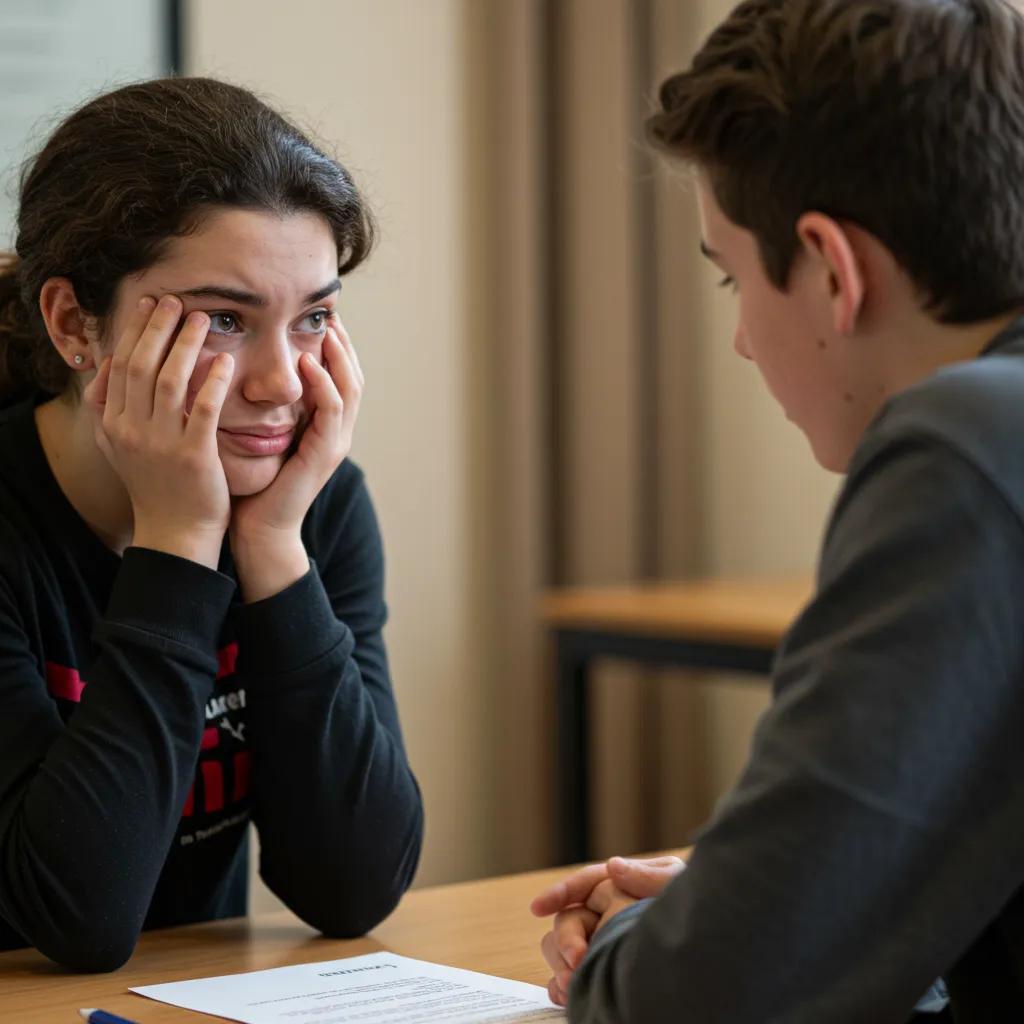
Empathy activities teach perspective-taking and emotion labeling, which link directly to improved self-regulation by converting vague feelings into manageable categories. A simple practice is Role Rewind, where teens recount a conflict from another person’s viewpoint to identify emotions and unmet needs. Debrief prompts should ask what cues signaled the other person’s feelings and which coping strategies could shift the interaction. These exercises reduce misinterpretation, support emotional intelligence, and prepare teens to choose adaptive responses in stressful social moments.
What conflict resolution skills can youth develop through role-playing?

Role-playing conflict scenarios lets teens rehearse negotiation, repair language, and compromise steps without real-world risk, thereby improving problem-solving under stress. A short role-play might present a shared-resource conflict (music volume, study space) with scripted turns for expressing needs and proposing solutions. Facilitators should coach language like “I notice…” and “I need…” and guide reflection on what worked and what could be changed. Safe debriefing includes validating emotions and practicing a brief repair phrase to build real-world application.
This quick comparison helps you pick activities by goal and logistics.
| Activity | Target Skill | Typical Time / Group Size |
|---|---|---|
| Describe and Draw | Clear verbal instructions and listening | 10–15 minutes / pairs |
| Role Rewind | Perspective-taking and emotional labeling | 10–20 minutes / small groups |
| Story Relay | Sequencing and cooperative speaking | 10–15 minutes / 4–6 teens |
This table summarizes how activity choice aligns with time and group needs and supports planning for school, home, or therapy settings. Choosing a targeted activity ensures efficient practice and clearer progress indicators.
How Can Communication Skills Be Developed Through Social Activities for Teens?
Developing communication skills through social activities uses active listening, structured turn-taking, and scaffolded speaking opportunities to build competence and reduce social anxiety. Active listening trains paraphrasing, reflective statements, and appropriate nonverbal cues so teens can engage without misattunement. Conversation starter games provide low-pressure prompts that encourage sharing and reciprocal questioning, which increases speaking confidence and peer connection. Below are reproducible exercises to build these skills in a short, repeatable format.
What are active listening exercises for teenagers?
Active listening exercises teach teens to paraphrase, validate feelings, and ask open questions through brief paired drills that emphasize accuracy. One exercise is Listen and Reflect, where one teen speaks for 60 seconds and the partner summarizes key points and feelings. Facilitators cue specific phrases to practice, such as “So you felt…” and coach nonverbal alignment like facing the speaker. Repeating short rounds and rotating partners builds transferable listening habits for school and friendships.
How do conversation starter games encourage peer interaction?
Conversation starter games lower stakes by using playful prompts that prompt curiosity and mutual disclosure, which reduces avoidance and builds rapport. Games like Two Truths and a Dream or Question Ball mix light sharing with goal-directed questions to scaffold increasing depth. Rules emphasize respectful follow-up questions and a no-judgment stance to keep shy teens engaged. Scaffolding options include allowing written responses for initial rounds or using small breakout pairs before whole-group sharing.
This numbered list explains why these methods work and how to implement them efficiently.
- Short rounds: Keep activities under 15 minutes to reduce fatigue and increase repetition.
- Clear roles: Assign speaker and listener to focus practice on specific skills.
- Guided debriefs: End each round with a brief reflection to consolidate learning.
These simple rules make communication drills practical for classrooms and therapeutic groups and set up measurable practice cycles for ongoing improvement.
What Empathy and Emotional Regulation Activities Are Best for Teens?
Empathy and emotional regulation activities build recognition, labeling, and coping skills that directly support social functioning and reduce reactive behaviors. Methods that combine perspective-taking with DBT-style emotion regulation—such as naming emotions, grounding techniques, and opposite-action practice—produce measurable reductions in interpersonal volatility. The following activities are therapist-friendly, adaptable for parents and educators, and connect to CBT/DBT mechanisms that target thinking patterns and emotion-driven behaviors. Implementers should include brief skills coaching and consistent debrief prompts.
How does emotion charades build emotional intelligence in adolescents?
Emotion charades teaches emotion recognition and vocabulary by having teens act out feelings without words while peers identify and discuss cues, linking observation to internal states. Variations include team play or a reflection round where actors reveal what triggered the emotion for them in a hypothetical scenario. Debrief questions focus on facial, vocal, and body cues and on coping strategies to manage that emotion. This exercise translates recognition into regulation by prompting practiced strategies like breathing or reappraisal.
What perspective-taking scenarios help teens understand others?
Perspective-taking scenarios present common teen conflicts—exclusion at lunch, missed deadlines, or social media misunderstandings—and ask participants to role-play alternate viewpoints. Facilitators provide prompts that guide cognitive empathy, such as “Describe what they might be feeling and why.” Reflection steps ask teens to list one action that would help and one question to clarify intent. Regular practice reduces biased assumptions and improves conflict resolution outcomes in real settings.
This bulleted list outlines core empathy-building elements used in these exercises.
- Labeling: Teach specific emotion words to expand vocabulary.
- Observation: Practice reading nonverbal signals reliably.
- Action plan: Convert recognition into one adaptive coping step.
| Exercise | Therapeutic Principle (CBT/DBT) | Expected Benefit |
|---|---|---|
| Emotion Charades | DBT emotion identification | Improved emotion labeling and reduced impulsive reactions |
| Perspective Role-Play | CBT cognitive restructuring | Reduced misattribution and increased perspective flexibility |
| Grounding Circle | DBT distress tolerance | Faster regulation during high arousal |
This table maps activities to therapeutic mechanisms so facilitators can choose exercises that target specific clinical goals. Aligning practice with CBT/DBT principles clarifies expected outcomes and supports measurement.
How Do Conflict Resolution and Assertiveness Activities Support Teen Social Growth?
Conflict resolution and assertiveness activities teach negotiation, clear expression of needs, and safe boundary setting through scripted practice and feedback cycles. These exercises improve self-efficacy, reduce escalation, and promote repair strategies that preserve relationships. Teaching “I” statements, stepwise problem solving, and role-played repair language equips teens to shift from reactive to goal-directed interaction. Below are practical templates and facilitation notes to integrate into short sessions at school, home, or therapy groups.
What role-playing conflict scenarios teach effective problem-solving?
Role-play templates simulate common disputes—shared schedules, teasing, or group work disagreements—and structure turns for stating the problem, expressing needs, and proposing solutions. Facilitators assign roles and time limits, then guide a reflective debrief focused on which phrases reduced defensiveness. Success indicators include mutual acknowledgment, one specific repair step, and a follow-up plan. These controlled rehearsals help teens transfer negotiated scripts into everyday conflicts.
How can teens practice assertiveness through "I" statements and boundary setting?
Practicing assertiveness uses scripted “I” statements and incremental boundary-setting drills that progress from read-aloud scripts to spontaneous phrasing. Sample scripts are simple and measurable, such as “I feel [feeling] when [behavior] because [impact]; I need [specific request].” Drills include responding to pushback with calm repetition and setting a clear consequence if boundaries are ignored. Repeated, coached practice strengthens the teen’s ability to maintain safety while asserting needs.
This short checklist helps facilitators structure sessions for steady skill growth.
- Script: Provide a short, repeatable “I” statement template.
- Practice: Run brief role-plays with immediate feedback.
- Generalize: Assign a real-life small-step homework to use the skill.
These steps ensure assertiveness training produces observable changes in teen interactions.
| Exercise | Virtual Adaptation | Required Tools / Platform |
|---|---|---|
| Breakout Role-Play | Use small video breakout rooms for paired practice | Video conferencing with breakout feature |
| Shared Whiteboard Brainstorm | Use whiteboard for nonverbal idea exchange and polls | Collaborative whiteboard and polling tool |
| Emotion Charades Online | Use emoji cards or reaction buttons for guessing | Chat reaction features and prepared prompts |
How Are Social Skills Activities Adapted for Virtual Settings in Teen Therapy?
Virtual adaptation preserves therapeutic mechanisms by translating role-play, feedback, and shared reflection into secure online formats that still allow repeated practice and therapist scaffolding. Online sessions use breakout rooms for small-group rehearsal, shared whiteboards for nonverbal collaboration, and chat/poll features to scaffold participation for shy teens. Licensed clinicians can facilitate turn-taking, observe nonverbal cues via video, and moderate exposure to peer interactions in a controlled environment. These adaptations maintain skill generalization and offer increased accessibility for adolescents who face barriers to in-person services.
Online vs. In-Person Social Skills Training for Adolescents
This study compared effectiveness of an adaptation of Laugeson and Frankel’s Program for the Education and Enrichment of Relational Skills (PEERS) social skills curriculum for adolescents in a live synchronous online environment with the traditional in-person program delivery. Participants were divided into two groups by method of intervention delivery. Before and after the intervention was delivered to all participants, both groups engaged in typical social activities in naturalistic activities outsi
1. The COVID-19 pandemic quarantine guidelines made finding quality telehealth services for autistic individuals a vital pursuit. Before the worldwide shift to widespread adoption of telehealth services, however, rural and underserved areas were already using telehealth options to access services, but not yet in the realm of social skills interventions because of the preference for in-person groups and lack of data regarding effectiveness of social skills in a telehealth environment.This study compared effectiveness of an adaptation of Laugeson and Frankel’s Program for the Education and Enrichment of Relational Skills (PEERS) social skills curriculum for adolescents in a live synchronous online environment with the traditional in-person program delivery. Participants were divided into two groups by method of intervention delivery. Before and after the intervention was delivered to all participants, both groups engaged in typical social activities in naturalistic activitie
Online vs. In-Person Delivery of Social Skills Group Intervention for Autistic Adolescents: Comparison of Social Behavior Outcomes, 2024
Virtual group therapy increases accessibility, provides consistent practice opportunities, and allows therapists to moderate social exposure safely while targeting social anxiety. Online groups can include teens from diverse settings, which broadens practice scenarios and resilience. Therapists use structured agendas and platform tools to ensure balanced participation and confidentiality. The moderated environment enables graded exposure, making it easier for teens to practice new skills with professional support.
How can traditional social skills games be modified for online environments?
Converting in-person games to online formats requires rethinking cues, timing, and engagement methods to fit video platforms while preserving interactional goals. Use quick polls to replace physical signals, timed chat turns for orderly sharing, and shared screens or whiteboards for collaborative tasks. Breakout rooms allow small-group practice before whole-group debriefs to reduce performance pressure. Facilitators should plan tech checks, visual cue coaching, and backup low-tech options to handle connectivity issues.
This brief note explains how clinical programs operationalize virtual skill work and when to seek more intensive support.
- When activities aren’t improving daily functioning: Consider a structured clinical program.
- For multi-hour, consistent practice: Programs can provide 9–15 hours weekly of therapy.
- For integrated family involvement: Look for programs offering individual, group, and family sessions.
Adolescent Mental Health offers a Virtual Intensive Outpatient Program (IOP) for Teens that uses structured online group and family sessions, CBT and DBT approaches, and licensed clinicians to reinforce social skills in a therapeutic context. The Virtual Intensive Outpatient Program (IOP) for Teens fosters social skill development through group therapy, family therapy, and by addressing underlying mental health conditions that impact social functioning. Parents and caregivers who find home-based activities insufficient can inquire about program options and a free clinical assessment to determine fit.
| Activity | Virtual Adaptation | Required Tools / Platform |
|---|---|---|
| Describe and Draw | Use shared screen or whiteboard for images | Video with screen-share and whiteboard |
| Story Relay | Rotate speaking using a calling order in chat | Video platform with hand-raise feature |
| Role Rewind | Breakout pairs then main-room reflection | Breakout rooms plus main-room debrief |
These practical mappings show how common activities translate online and what minimal tools are needed to run them effectively. Planning platform features in advance preserves the therapeutic mechanism and supports measurable skill gains.