

How to Balance School and Virtual IOP: A Guide for Teens Managing Online Therapy and Academic Success
Finding the right balance between school and an intensive online therapy schedule can feel overwhelming, but practical planning and clear communication make it manageable. This guide explains what a Virtual Intensive Outpatient Program (Virtual IOP) is, how it supports teen mental health, and specific steps teens and families can use to keep grades and well-being stable. You will learn how Virtual IOPs integrate evidence-based therapies like CBT and DBT with school life, actionable time management strategies, ways to request academic accommodations, and parent-focused supports to create structure at home.
The article maps the program structure, day-to-day strategies, academic benefits, parent roles, and common questions so families can decide whether a Virtual IOP fits a teen’s academic and clinical needs. Throughout, target concepts such as balancing school and virtual IOP, time management for virtual IOP students, and academic accommodations are woven into practical examples and tools.
What Is a Virtual IOP and How Does It Support Teen Mental Health?
A Virtual Intensive Outpatient Program (Virtual IOP) is a structured outpatient treatment delivered through telehealth that provides frequent therapy without residential hospitalization. It works by combining individual, group, and family therapy with psychiatric review to reduce symptoms and teach practical coping skills, which in turn supports school attendance and concentration. The program’s intensity and skill-focused sessions create a bridge between clinical care and daily life, enabling teens to practice coping strategies in real-time while remaining at home and in school. Understanding the program components and schedule helps families plan academic adjustments and maintain classroom engagement.
What Does Virtual Intensive Outpatient Program Involve for Students?
Virtual IOPs typically include multiple weekly sessions that focus on skills practice, symptom monitoring, and family involvement to support recovery and functioning. Sessions commonly run across several days each week and emphasize evidence-based therapies, homework between sessions, and coordination with outpatient clinicians for medication management when needed. Teens can expect a mix of check-ins, skills training, and group processing that reinforce classroom-ready coping strategies and reduce crises that interrupt learning. This rhythm of care aims to stabilize symptoms while supporting ongoing school participation and homework completion.
Which Mental Health Conditions Does Virtual IOP Address for Teens?
Virtual IOPs treat a range of adolescent conditions including anxiety, depression, PTSD, bipolar disorder, OCD, and ADHD by applying structured therapeutic approaches tailored to each diagnosis. Therapies commonly used include cognitive behavioral therapy (CBT) and dialectical behavior therapy (DBT), both of which teach skills for emotion regulation, attention, and coping under stress. Programs focus on translating symptom improvement into safer, more consistent school attendance and academic focus. Clinicians determine whether Virtual IOP is appropriate based on clinical need versus higher or lower levels of care.
Telehealth Impact on Virtual IOP Appointment Attendance for Adolescents
The rapid deployment of intensive outpatient virtual services, including for adolescents, during COVID-19, presented an opportunity to examine telehealth’s impact on appointment attendance. This study examined rates of attending these scheduled virtual intensive outpatient services compared to pre-pandemic in-person rates, considering factors like demographics and clinical characteristics.
Showing up is half the battle: The impact of telehealth on psychiatric appointment attendance for hospital-based intensive outpatient services during COVID-19, AW Childs, 2021
How Does Virtual IOP Offer Flexibility for Busy Students?
Virtual IOPs reduce transportation barriers and make it possible to schedule treatment around class times and extracurriculars to maintain academic continuity. Flexible timetables allow families and clinics to arrange sessions in mornings, afternoons, or evenings so core classes are less likely to be missed. This model keeps teens connected to school staff and peers while receiving concentrated support, which helps prevent academic decline during treatment. The practical flexibility also lowers the logistical burden on families, making sustained treatment more feasible.
Time Management Skills Crucial for Student Success in Online Courses
AbstractTime Management Skills and Student Performance in Online CoursesIt has been said that “A goal without a plan is just a wish.” (Antoine de Saint-Exupéry). Aseducators, we have the almost daily task of turning the wishes that come with education into therealities of degrees and careers. In part, we accomplish this by requiring students to plan – that isto use their time effectively to accomplish course goals and objectives.
Previous research by the authors revealed that students had to learn to manage their time in orderto be successful. Furthermore, many students indicated that their time management skills hadimproved from taking online courses. Because of the extensive time required to develop andimplement online courses, instructors need to consider which features are most important to theirofferings for student development. Whereas course content and homework require extensivetime, they are baseline features that are important to the course offering,
Time management skills and student performance in online courses, SL Miertschin, 2015
Adolescent Mental Health offers a Virtual IOP designed specifically for teens aged 12–17 that emphasizes convenience and clinical rigor. Their Virtual IOP typically runs 9–15 hours per week across 3–5 days, combining individual, group, and family therapy with psychiatric care and clinical support. The program uses evidence-based CBT and DBT led by social workers and teen therapists, and it is positioned to reduce transportation barriers and work with major insurance plans. This specific structure helps families coordinate therapy hours with school schedules while ensuring clinically supervised care.
Scheduling Interventions Improve Time Management and Academic Performance in Online Courses
1. Time management skills are an essential component of college student success, especially in online classes. Through a randomized control trial of students in a for-credit online course at a public 4-year university, we test the efficacy of a scheduling intervention aimed at improving students’ time management. Results indicate the intervention had positive effects on initial achievement scores; students who were given the opportunity to schedule their lecture watching in advance scored about a third of a standard deviation better on the first quiz than students who were not given that opportunity.These effects are concentrated in students with the lowest self-reported time management skills. However, these effects diminish over time such that we see a marginally significant negative effect of treatment on the last week’s quiz grade and no difference in overall course scores. We examine the effect of the intervention on plausible mechanisms to explain the observed achievement effects. We find no evidence that the intervention affected cramming, procrastination, or the time at which students did work.
Does inducing students to schedule lecture watching in online classes improve their academic performance? An experimental analysis of a time management …, R Baker, 2019
How Can Teens Manage School While Attending Virtual IOP?
Balancing school and Virtual IOP requires proactive time management, clear communication with educators, and an understanding of available academic accommodations. Teens who plan study blocks, coordinate session times with quieter school periods, and use simple tracking tools tend to keep up with assignments more effectively. Integrating therapy homework into short daily practice and prioritizing sleep supports concentration for classes and sessions alike. The following subsections outline practical strategies, communication approaches, and the main accommodation options to discuss with school teams.
What Are Effective Time Management Strategies for Virtual IOP Students?

Effective time management relies on consistent planning, brief focused study blocks, and clear session scheduling so therapy and classwork do not compete. Use a weekly planner to block therapy times, class periods, and two short study sessions per day to maintain momentum on assignments. Prioritize tasks by deadline and break large projects into small steps that can be completed between sessions or during quieter hours. These habits reduce overwhelm, support better focus in both therapy and school, and create predictable routines that teachers and clinicians can rely on.
- Use a shared weekly calendar to block therapy and study hours so nothing overlaps.
- Break assignments into 20–40 minute steps to make progress without long time commitments.
- Reserve a consistent recovery routine after intense sessions to rest and reset attention.
These steps help teens translate therapeutic gains into reliable study habits and steady school participation.
| Session Type | Typical Duration | Suggested Schedule Adjustment |
|---|---|---|
| Individual therapy | 30–60 minutes | Schedule during non-core class periods or after school |
| Group therapy | 45–90 minutes | Coordinate with study hall or elective periods |
| Family sessions | 30–60 minutes | Arrange during evenings or parent-available blocks |
This planner comparison helps teens and families place sessions where they least disrupt academics and still receive comprehensive care.
How Can Teens Communicate with Teachers and School Counselors About Virtual IOP?
Clear, concise communication with teachers and counselors preserves privacy while ensuring needed academic supports are in place for a teen in treatment. Start with a short message that explains the teen is receiving scheduled outpatient mental health treatment and will need flexibility for specific dates or deadlines; offer to share documentation if required. Emphasize collaboration: propose brief check-ins with the school counselor and ask about make-up work policies and extension procedures. Involving a parent or clinician in initial communication can clarify boundaries and speed accommodations while protecting the teen’s privacy.
- Begin with a brief, factual message that requests reasonable accommodations.
- Offer a clinician or parent follow-up to coordinate specific logistics if needed.
- Ask about preferred methods for submitting late work and arranging make-up tests.
Clear templates reduce anxiety and signal the teen’s commitment to maintaining academic responsibilities.
What Academic Accommodations Are Available for Students in Virtual Therapy?
Schools can provide supports such as extended deadlines, modified schedules, excused absences for treatment, and structured make-up work to help teens stay academically engaged during treatment. Formal plans like 504 accommodations or individualized education programs (IEPs) may be appropriate when treatment affects learning or attendance long-term. To request accommodations, contact the school counselor or special education coordinator with documentation from a clinician and a proposed plan for classroom adjustments. Parents can advocate effectively by documenting needs, proposing reasonable supports, and offering regular updates on progress.
- Extended deadlines and alternative test scheduling
- Modified class schedules or partial-day attendance
- Excused absences for treatment with agreed make-up plans
These accommodations support continuity of learning while the teen focuses on therapeutic gains.
What Are the Benefits of Virtual IOP for Maintaining Academic Performance?
Virtual IOP helps maintain academic performance by reducing symptoms that interfere with concentration, attendance, and homework completion while teaching skills that transfer to school settings. Skills training in CBT and DBT improves emotion regulation and distress tolerance, which directly impacts classroom behavior and test anxiety. Schools and families often observe steadier attendance and increased ability to manage deadlines as teens practice coping strategies in therapy. The practical result is a stronger platform for academic recovery and sustained classroom engagement.
How Does Virtual IOP Improve Mental Well-being and School Success?
By targeting core symptoms—like anxiety and depressive withdrawal—Virtual IOP reduces barriers to attending class, participating in group activities, and completing assignments. Skill rehearsal in therapy strengthens executive functions such as planning and sustained attention, which are essential for academic tasks. Regular monitoring and psychiatric support also optimize medication plans when needed, decreasing symptom-related disruptions. These clinical mechanisms create clearer pathways for improved grades and school involvement over the course of treatment.
Virtual IOP vs. In-Person Partial Hospitalization for Adolescent Eating Disorders
This study found that a virtual, family-based, intensive outpatient program for youth with eating disorders had similar treatment outcomes to an in-person partial hospitalization program. Specifically, the virtual IOP demonstrated comparable effectiveness in reducing eating disorder symptomatology and improving overall functioning.
Adolescent eating disorder treatment outcomes of an in‐person partial hospital program versus a virtual intensive outpatient program, 2023
| Program | Academic Involvement | Outcome |
|---|---|---|
| Virtual IOP (telehealth) | Attendance, participation | Improved or maintained school engagement |
| Outpatient therapy (less frequent) | Partial support | Variable, depends on session frequency |
| Intensive residential care | Full-time treatment | Requires academic planning for reintegration |
This comparison clarifies how treatment intensity and format relate to school involvement and planning needs.
What Coping Skills and Resilience Do Teens Develop Through Virtual IOP?
Virtual IOP teaches concrete CBT and DBT skills such as cognitive reframing, problem-solving, emotion regulation, and distress tolerance that teens can apply during tests, presentations, or social stress. Practicing short grounding and breathing techniques helps manage acute anxiety before exams or in class. Family sessions build communication patterns that reduce conflict and free mental energy for learning. Over time, repeated skill use builds resilience and reduces the frequency of school-disruptive crises.
Are There Success Stories of Teens Balancing School and Virtual IOP?
Many teens in structured Virtual IOPs regain regular attendance and show improved task completion once skills stabilize symptoms and routine is reestablished. Typical positive outcomes include returning to full schedules, improved test focus, and better homework consistency as coping tools are integrated into daily life. Families report that coordination between clinicians and school staff helps create realistic reintegration plans and track progress. If you’re considering treatment, requesting an assessment can clarify expected outcomes and tailor supports for school success.
| Case Example | Strategy Used | Typical Outcome |
|---|---|---|
| Teen A (anxiety) | Morning sessions + planner | Returned to full attendance |
| Teen B (depression) | Daily behavioral activation | Improved homework completion |
| Teen C (OCD) | Exposure tasks + school coordination | Reduced class avoidance |
These anonymized scenarios show how targeted strategies align with academic improvements and practical school planning.
How Can Parents Support Teens Balancing School and Virtual IOP?
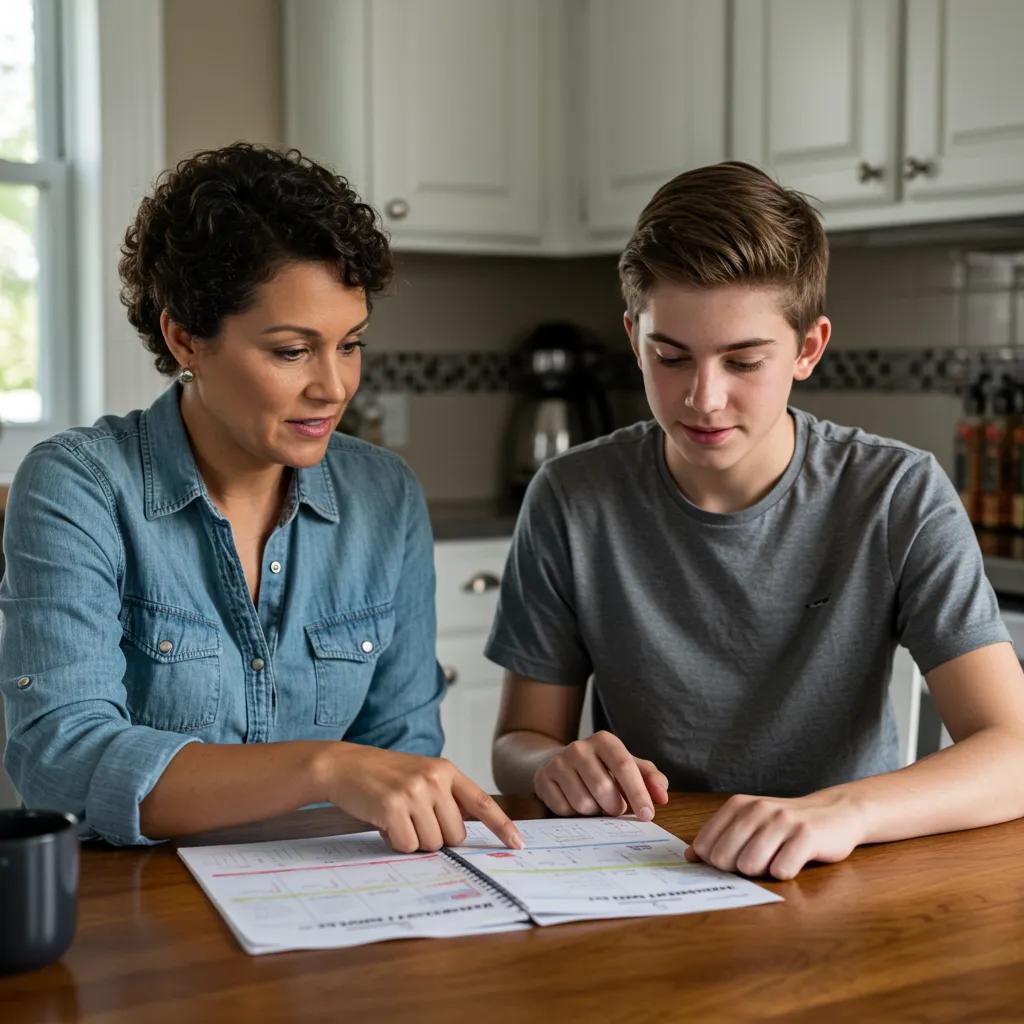
Parental support centers on scheduling, communication facilitation, and creating a predictable home routine that reinforces therapeutic gains. Parents who help set shared calendars, attend family sessions when appropriate, and coordinate with school staff reduce friction and protect study time. Encouraging consistent sleep, nutrition, and brief recovery periods after sessions supports concentration and mood stability for school. The following H3s outline concrete actions parents can take and family-level self-care practices that sustain treatment progress.
What Are Practical Ways Parents Can Help With Scheduling and Communication?
Parents can lead by setting up a shared digital calendar that highlights therapy sessions, class times, and study blocks to prevent overlap and reduce last-minute stress. They can also initiate contact with school counselors to request accommodations and provide clinician documentation when needed. Attending family therapy sessions helps parents learn how to support homework routines and reinforce coping skills at home. These steps create predictable structure that enables teens to manage both therapy and academics more effectively.
- Create and maintain a shared weekly calendar for the household.
- Contact school staff early to arrange accommodations and plan make-up work.
- Join family therapy sessions to learn supportive strategies and set boundaries.
| Action | Who Leads It | Expected Outcome |
|---|---|---|
| Scheduling help | Parent | Improved attendance and fewer conflicts |
| School communication | Parent/Clinician | Faster accommodation setup |
| Home routine coaching | Parent | Better sleep and study habits |
This table clarifies parental roles and the typical benefits of active involvement in coordination.
How Can Families Encourage Self-Care and Stress Management During Treatment?
Families can support self-care with consistent sleep schedules, regular meals, and brief physical activity breaks to sustain energy and mood for both school and therapy. Encouraging small, achievable habits—like 10 minutes of focused study or a nightly relaxation routine—helps teens experience steady progress without overwhelm. Modeling calm problem-solving and limiting late-night screens enhances sleep quality and cognitive readiness for school. When symptoms escalate, families should coordinate with the treatment team for additional supports or crisis planning.
- Prioritize consistent sleep and meal times to support concentration.
- Encourage short, daily self-care practices that build resilience.
- Know when to reach out to clinicians for extra support or crisis guidance.
These family-level practices create stable conditions for academic and therapeutic progress.
What Are Common Questions About Balancing School and Virtual IOP?
Families frequently ask whether teens can attend school while in Virtual IOP, how flexible sessions are, and how social life fits into treatment schedules. The short answers are affirmative: most Virtual IOPs are designed to allow continued school participation through flexible scheduling, accommodation planning, and clinician-school coordination. Below are concise answers to these common concerns, with practical suggestions for negotiating schedules and preserving privacy.
Can Teens Attend School While Participating in Virtual IOP?
Yes. Virtual IOPs are structured to allow most teens to continue attending school while receiving intensive therapy by offering flexible session times and coordination with school staff. Programs typically schedule sessions to avoid core classes and provide clinicians who can communicate with schools about accommodation needs when appropriate. Planning ahead and documenting requests for extensions or excused absences helps preserve academic standing. With clear scheduling and simple accommodations, many teens remain engaged in both treatment and school.
How Flexible Are Virtual IOP Sessions for Academic Commitments?
Virtual IOPs commonly offer morning, afternoon, and sometimes evening options and run across 3–5 days per week to fit around classes and extracurriculars. Clinicians and families can often arrange make-up sessions or asynchronous supports when conflicts arise, ensuring continuity of care without sacrificing key academic commitments. Early conversations with the treatment team and school counselors make flexible scheduling smoother. Flexibility is a core advantage of telehealth-based IOPs for busy teens balancing school demands.
How Do Teens Balance Social Life and School During Virtual Therapy?
Balancing social activities involves prioritizing key events, communicating boundaries, and gradually reintroducing social commitments as symptoms improve. Teens can use planning tools to protect time for both therapy and the most meaningful social engagements, reducing the pressure to “do everything” at once. Using coping skills learned in sessions helps manage social anxiety and scheduling stress. With clinician support and family coordination, teens can maintain friendships and extracurricular involvement while progressing in treatment.